
Maintenance
How to Improve Driveway Drainage the Right Way
Learn how to improve driveway drainage with grading, drains, and surface repairs to prevent water damage, protect curb appeal, and reduce repair costs.
By Innova Hardscapes and Landscapes · Published September 17, 2026
A driveway should guide rainwater away from your home, garage, and landscape beds - not channel it straight toward them. Knowing how to improve driveway drainage starts with identifying where water collects, where it travels, and what is preventing it from draining naturally. For Upstate South Carolina homeowners, frequent heavy rain, sloped lots, clay-rich soil, and aging pavement can turn a small drainage issue into standing water, driveway damage, and a muddy front yard.
The right solution is rarely just adding a drain. Effective driveway drainage is a coordinated plan involving surface slope, runoff control, soil conditions, and materials that fit the property. A thoughtfully designed improvement can protect your investment while making the approach to your home look cleaner and more polished.
Start by Finding the Source of the Water
Before selecting a drainage system, watch the driveway during or shortly after a hard rain. Notice whether water ponds in the center of the drive, rushes down its edges, collects in front of the garage, or washes soil and mulch into the street. These patterns reveal whether the main problem is poor grading, a low spot in the pavement, roof runoff, compacted soil, or a combination of several issues.
Water that pools near the garage is especially urgent. Over time, it can seep beneath concrete or asphalt, weaken the base material, create cracks, and increase the risk of moisture entering the garage. Water that runs across a driveway from a higher lawn area may be less obvious, but it can still erode the edges and leave behind ruts, mud, and debris.
Is the water landing there, or arriving from somewhere else?
That distinction changes the fix. Water that falls directly on the driveway and simply has nowhere to go is a surface problem — the answer is usually grading or a surface drain at the low point. Water that shows up on the driveway but originates elsewhere (a downspout around the corner of the house, runoff from a neighboring or uphill property, a spring or persistently wet area feeding groundwater toward the pavement) is being delivered from another source, and grading the driveway itself won’t stop it. In that case, the fix has to start upstream, at the source, not at the driveway surface.
A quick way to tell them apart: watch the driveway during rain rather than after it. If the wet area only appears while it’s actively raining and drains within an hour or so afterward, you’re likely looking at a surface issue. If a spot stays wet well after the rest of the driveway and yard have dried, or is damp even on days it hasn’t rained recently, water is probably arriving from somewhere else — a downspout, a neighboring slope, or a subsurface source — and tracing that path matters more than any change to the driveway itself.
Properties with rolling grades — a driveway that sits below a hillside, or one that receives runoff crossing in from a neighboring lot — tend to deal with the “arriving from elsewhere” version of this problem more often than a flat lot does.
Why This Is a Base Problem, Not Just a Surface One
Concrete and asphalt driveways sit on a compacted base, and that base helps support and distribute the weight of a vehicle across the pavement system — the surface layer isn’t doing that job alone. Water that repeatedly reaches that base, rather than shedding off the surface, can soften and gradually wash out the material supporting the pavement from underneath. The surface can look intact for a while as this happens, since the damage often starts below where it isn’t visible, and by the time a crack, a dip, or a soft spot appears on top, the base beneath it may already be affected.
That’s the practical reason grading and drainage are usually addressed before a surface repair, not after it. Patching or resurfacing a driveway without correcting the water reaching its base can leave the underlying cause in place — the same low spot or unmanaged runoff may undermine the new surface the same way it affected the old one.
How to Improve Driveway Drainage With Proper Grading
Grading is the foundation of most successful driveway drainage improvements. The driveway surface should generally slope away from the house and garage so water has a clear route toward an appropriate discharge area. That may be the street, a swale, a landscaped drainage zone, or a collection system designed for the property.
A driveway can be graded from the center outward, called a crown, or it can slope consistently in one direction. The best approach depends on the layout of the home, garage placement, surrounding landscape, and where water can safely go. A crown is often useful on wider driveways because it sends water toward both sides. A single slope may be better where one side leads to a properly designed drainage area.
The goal is not to move water quickly without a plan. Redirecting runoff toward a neighbor’s property, a foundation, or a steep bare slope can create a new problem. Good grading manages water in a controlled direction and protects the appearance of the yard at the same time.
For an existing concrete or asphalt driveway, correcting the slope may require removing and replacing a section rather than attempting a surface patch. If the driveway has settled because the base beneath it has washed out or compacted unevenly, a cosmetic repair often will not hold up. Addressing the base and drainage together is generally the more durable choice.
Add the Right Drain for the Problem
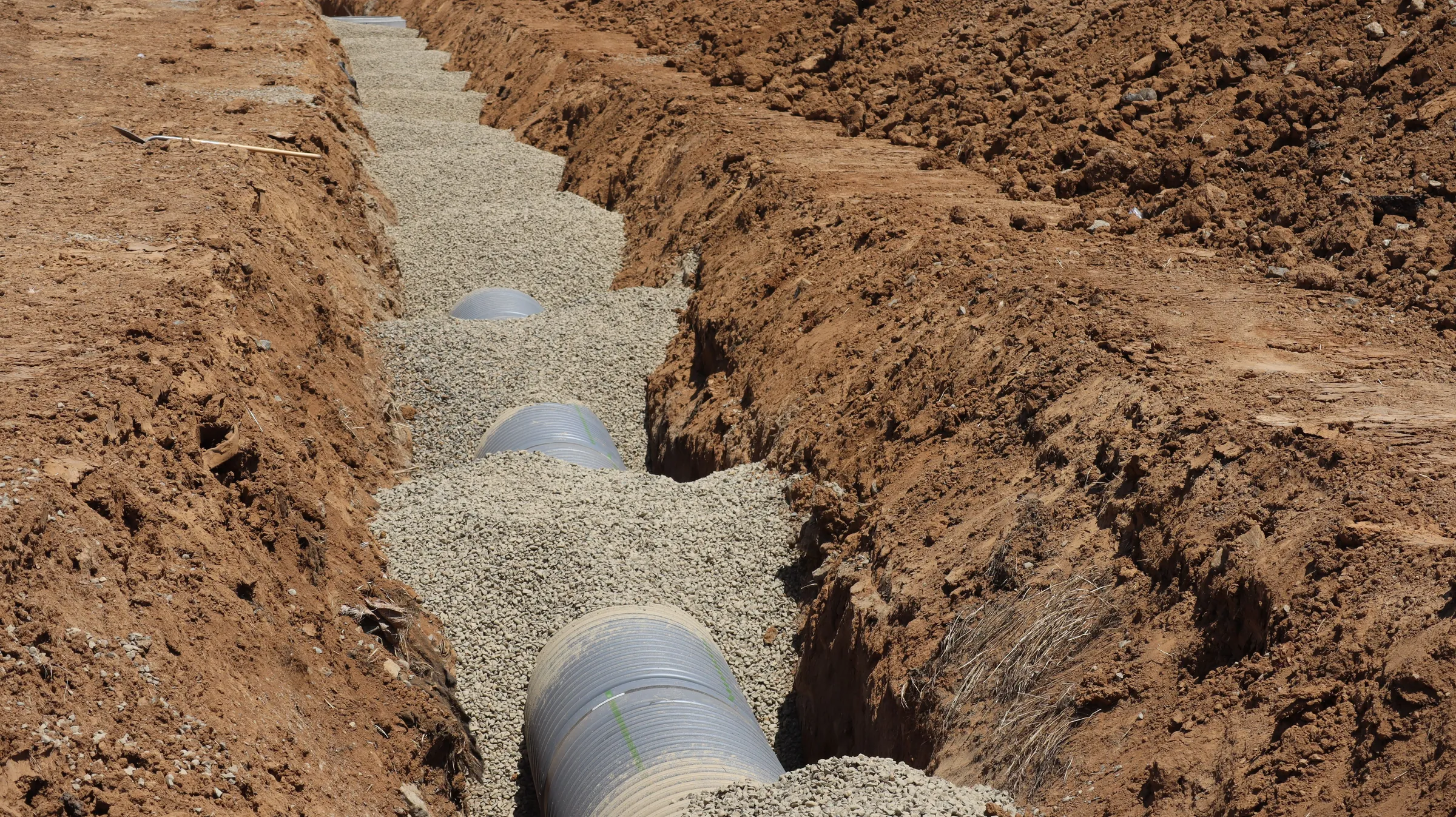
When grading alone cannot manage runoff, a drain can collect water before it reaches a vulnerable area — a channel drain across the width of the driveway near a garage entrance, a French drain along an edge where subsurface water is the culprit, or a catch basin at a low point that connects to buried pipe. The right choice depends on where the water is and whether it’s moving across the surface or through the soil beneath it — see our landscape drainage guide for how each of those systems actually works and how grading, collection, conveyance, and discharge fit together.
The detail specific to a driveway: whatever drain you use, it has to be sized and placed for how vehicles use the space. A grate set flush and centered where tires won’t repeatedly roll over its edge, and pipe routed where it won’t need to be dug up for a future utility repair, matter as much as picking the right drain type in the first place. And every drain still needs a dependable outlet — a drain that collects water but has nowhere appropriate to send it generally won’t solve the problem, regardless of which type it is.
Control Roof Runoff Before It Reaches the Driveway
Driveway drainage problems are sometimes caused by water coming off the roof instead of rain falling directly on the pavement. A downspout that empties beside a driveway can saturate the base, wash out gravel, and create slippery algae growth along the edge.
Extending downspouts away from the driveway is a simple first step. On more challenging lots, underground downspout piping may be needed to direct roof runoff toward a safe drainage area. The pipe should maintain enough slope to flow properly and should not discharge beside the foundation, onto a walkway, or into a spot that already struggles with standing water.
Keep gutters clean as well. Overflowing gutters can dump a surprising amount of water onto a driveway during a storm. If you see a concentrated stream falling near the garage or pavement edge, correcting the gutter system may reduce the drainage burden immediately.
Repair Cracks, Low Spots, and Failing Edges
Cracks do not always cause drainage issues, but they give water a path into the driveway base. Once water enters beneath the surface, freeze-thaw cycles, soil movement, and repeated traffic can enlarge the damage. In Upstate SC, winter weather may be milder than in northern climates, but periodic freezing still makes neglected cracks and low areas worse.
Small cracks can often be sealed before they spread. Larger cracks, sunken sections, or crumbling edges deserve a closer evaluation. A low spot may indicate that the soil beneath has settled, that water has eroded the base, or that the original driveway was not built with adequate compaction.
Paver driveways offer a different set of considerations. They can be lifted and reset when settlement occurs, making it possible to correct localized drainage issues without replacing the entire surface. Permeable pavers can also help reduce runoff, but they require a properly built gravel base and periodic maintenance to prevent sediment from clogging the joints.
Use Landscaping to Support the Drainage Plan
A driveway does not have to be surrounded by plain grass or bare dirt. Landscape features can help slow, filter, and direct water while improving curb appeal. A shallow swale planted with moisture-tolerant grasses or perennials can carry runoff through the yard more gracefully than an exposed ditch. River rock can stabilize an area that receives concentrated flow, especially near a downspout outlet or driveway edge.
Mulch beds need careful design near drainage paths. Fine mulch can float or wash into the driveway during heavy rain, leaving a messy surface and exposing plant roots. Stone edging, larger mulch, groundcover plants, or strategically placed boulders can help hold the bed in place.
The key is to make the landscape part of the solution rather than an obstacle to drainage. A beautiful entry landscape should frame the driveway, not trap water against it.
Know When a Professional Assessment Makes Sense
A homeowner can often handle routine maintenance such as clearing gutters, sealing small cracks, and keeping leaves out of drain grates. But recurring ponding, erosion, garage flooding, or pavement settlement usually calls for a site-specific assessment. Drainage repairs can involve excavation, underground piping, concrete work, grading, and landscaping, so the details matter.
A professional hardscape and landscape contractor can evaluate the full path of the water — where it starts, where it travels, and where it needs to end up — instead of treating only the visible symptom where the puddle happens to form. See our process for how that site assessment works, whether the fix turns out to be grading, a drain, a paving repair, or a combination.
If rainwater is repeatedly claiming part of your driveway or yard, take photos during storms and note where it begins, where it pools, and where it should safely exit. Those observations provide a clear starting point for a drainage solution that protects your home and keeps your property looking cared for in every season.
Related Services
Drainage Solutions
Solves standing water and erosion issues before they damage anything else on the property.
Driveways
Paver driveways built on a base engineered for daily vehicle traffic, not just poured for looks.
Retaining Walls
Engineered to hold grade and drain correctly, finished to complement the rest of the property.
Related Articles
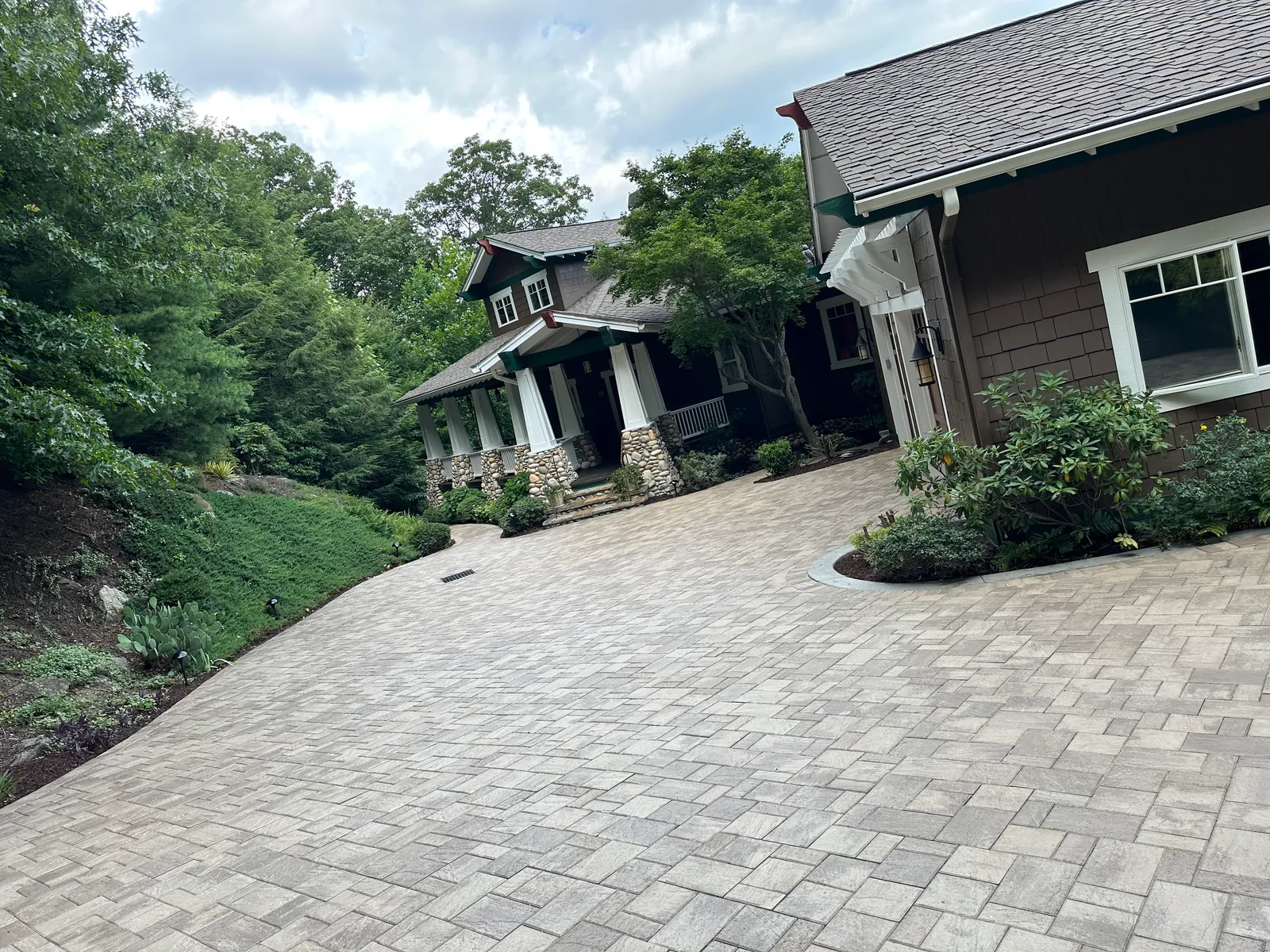
Driveway Paver Repair Methods That Last
September 25, 2026
Compare driveway paver repair methods for sunken, loose, stained, and cracked areas, and learn when professional base repair is the smarter long-term choice.
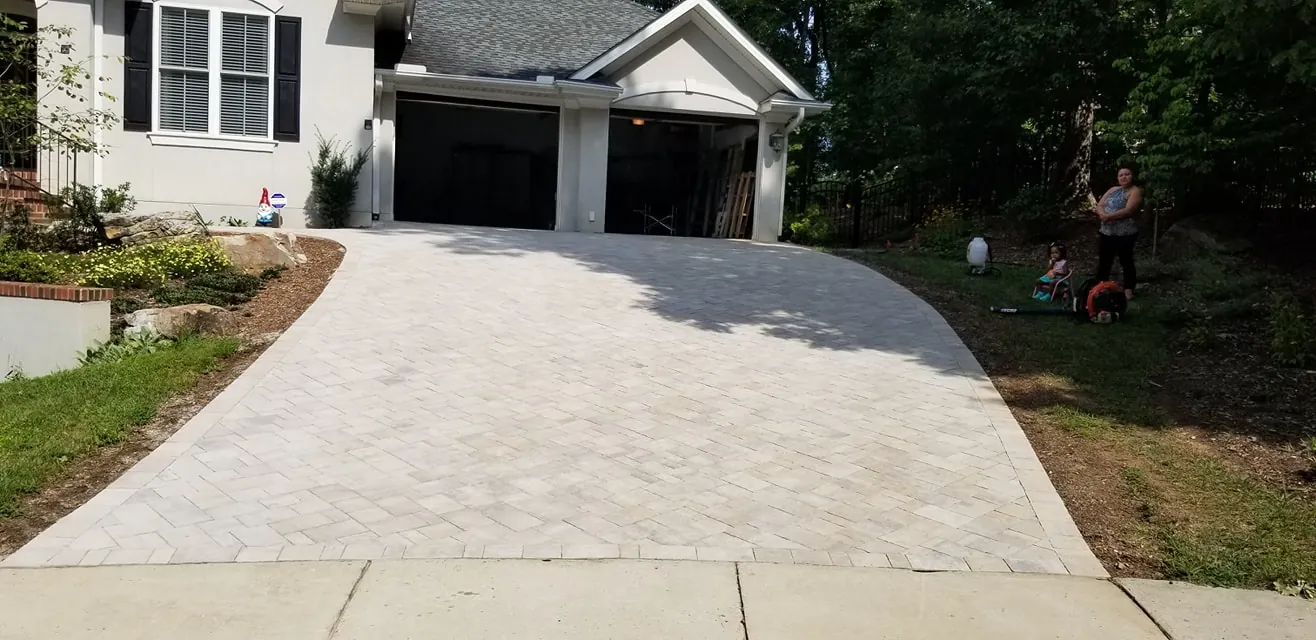
Brick Paver Cleaning and Sealing That Lasts
August 10, 2026
Brick paver cleaning and sealing protects patios, driveways, and pool decks from stains, weeds, fading, and wear across Upstate South Carolina homes.
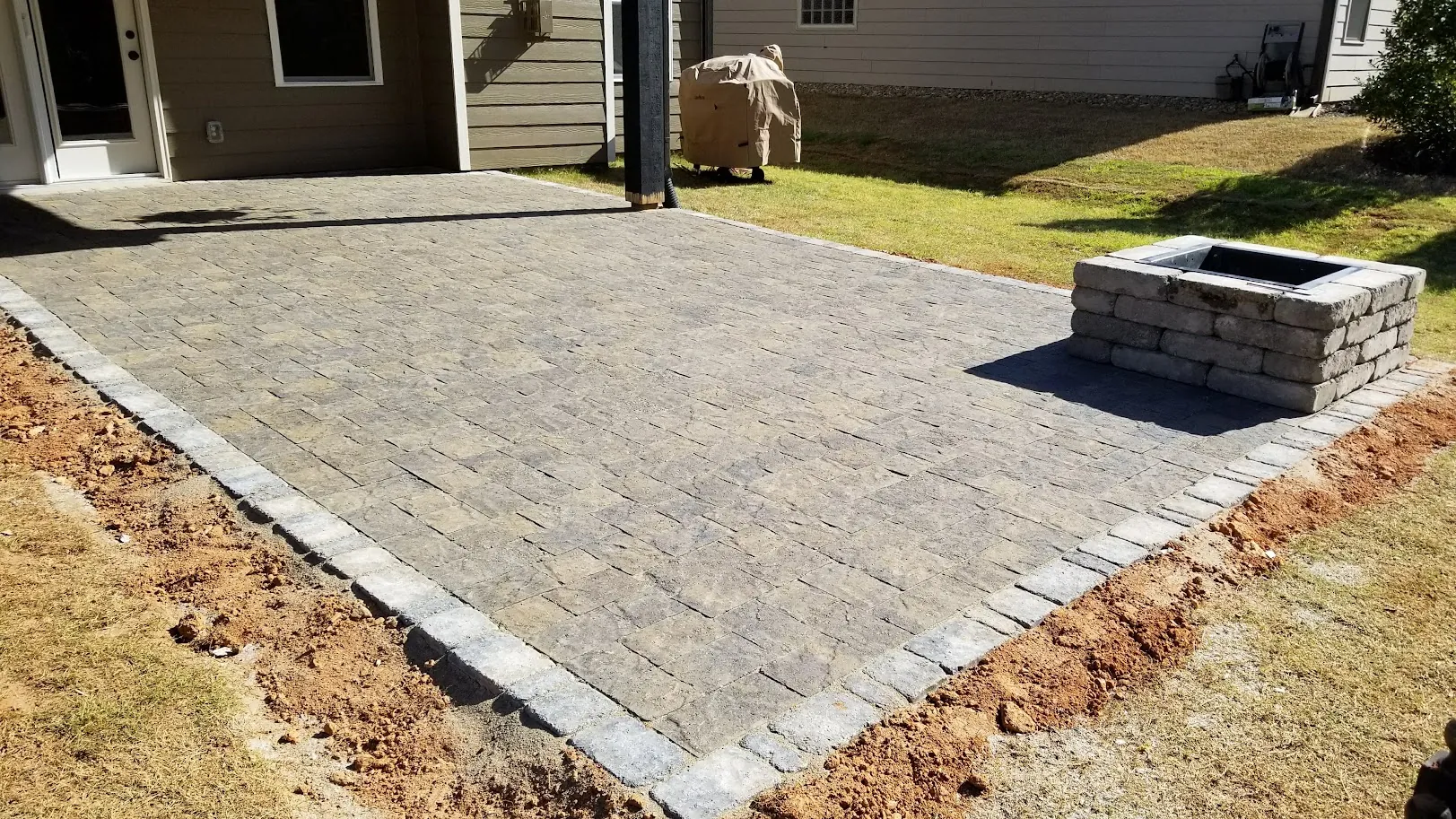
Caring for Your Paver Patio or Driveway: A Simple Seasonal Maintenance Guide
August 6, 2026
A paver patio or driveway is built to last, but a little regular care keeps it looking and performing the way it did on installation day.
Ready to start your project?
Tell us about your space and we'll follow up to schedule a consultation.